
-
Unfortunately, nothing was found for your request, you can search for another keyword, or contact us with your question through the feedback form
Search results (25)
All results (25)

The Experience of War and Migration Should Not Be a Barrier to Employment: Findings from a Discussion Organised by the R2P
June 11, 2026
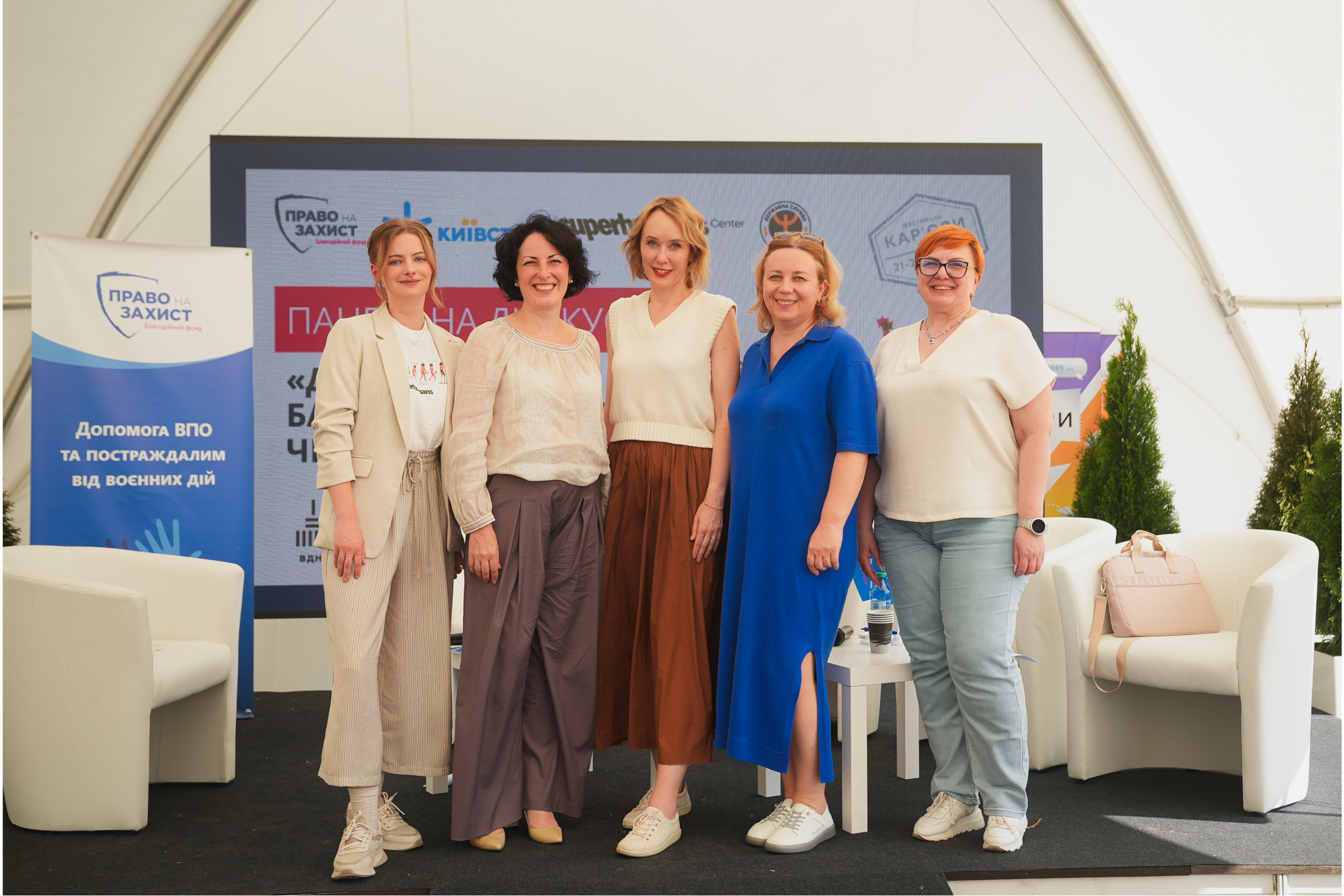
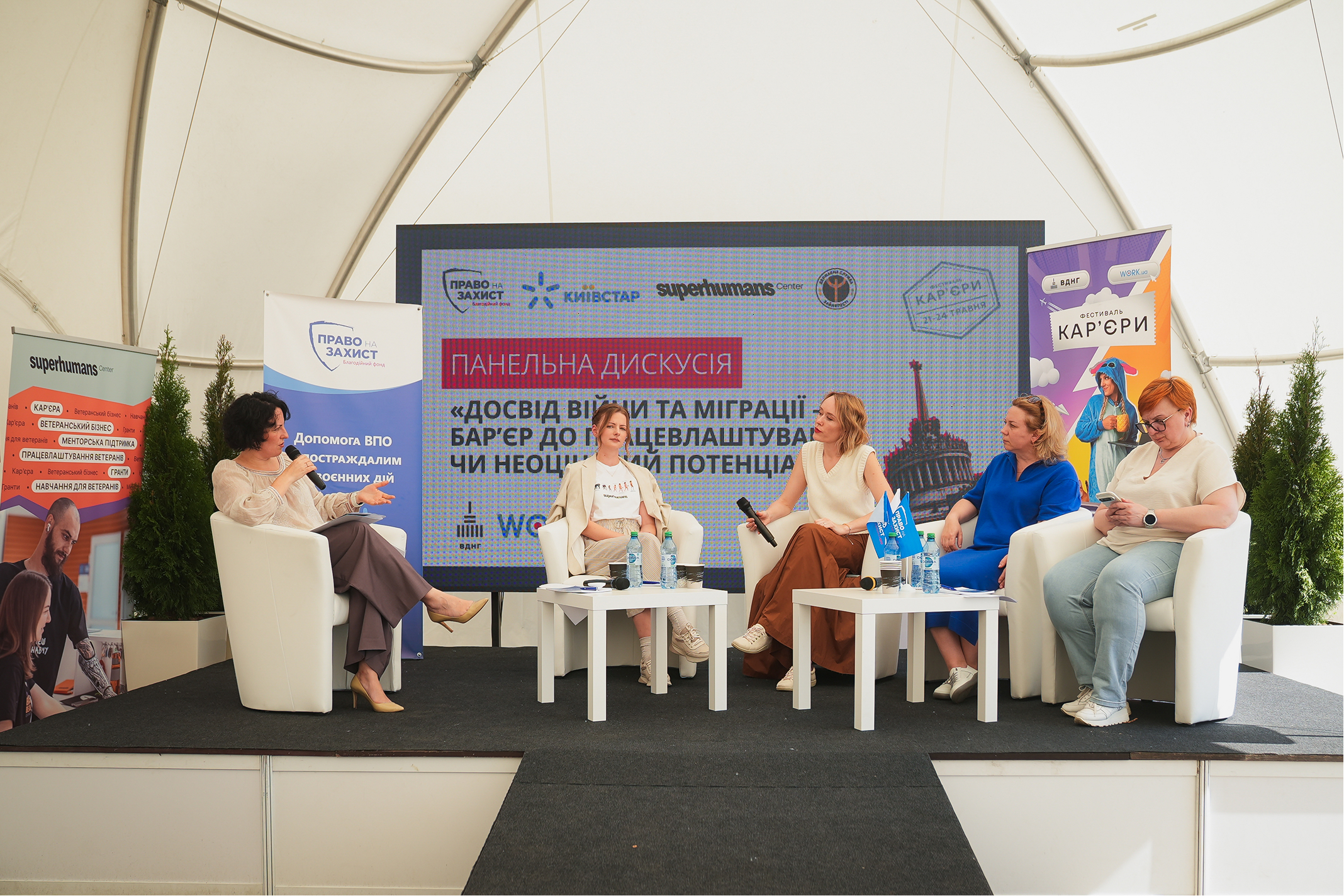
On 22 May, as part of the Career Festival at VDNH, Right to Protection organised a panel discussion, The Experience of War and Migration: A Barrier to Employment or Untapped Potential?
The participants discussed why the Ukrainian labour market is currently losing people: not because of a lack of potential, but because of barriers to accessing work. The conversation focused on veterans, people with disabilities, internally displaced persons, refugees, asylum seekers, foreigners, and stateless persons — people whose experiences can serve as a resource for the country’s recovery.
Valeriia Sekisova, Head of the Economic Inclusion for IDPs and the War-Affected Population programme at R2P, moderated the panel. The conversation included:
- Nadiya Kovalchuk, Programme Director at R2P;
- Inna Bondini, Deputy Head of the Department for the Implementation of Veterans’ Policy and Career Guidance at the State Employment Centre;
- Svitlana Kuzemko, Head of Talent Acquisition and Development at Kyivstar;
- Viktoriia Kaluniuk, Project Manager for the Reintegration of Veterans and Their Families at Superhumans.
Nadiya Kovalchuk highlighted stateless persons, refugees and asylum seekers — groups for whom access to employment often remains difficult due to additional procedures, documentation-related barriers, and a lack of awareness among employers.
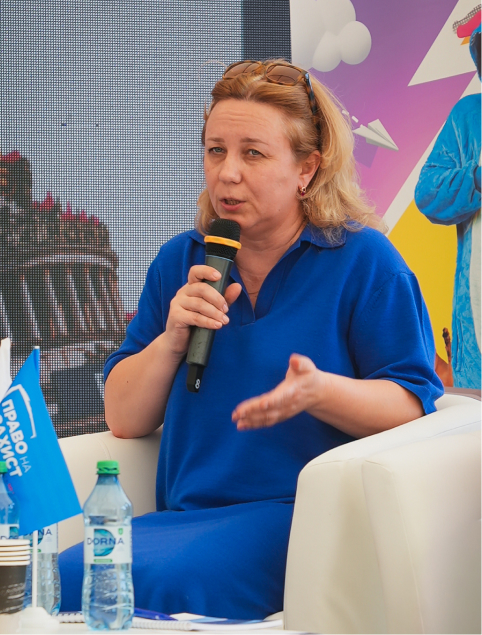
Nadiya Kovalchuk, Programme Director at R2P
“Having the legal right to work does not always mean actually being able to find a job. A person may go through the process and obtain the necessary documents, only to find that the system or the employer is not prepared to accommodate their circumstances.”
During the discussion, it was noted that Ukraine already has many national strategies and policies, but ensuring their proper coordination remains a challenge. The issue of employment cannot be considered in isolation from the topics of forced displacement, veterans’ policy, demographic changes, the return of Ukrainians from abroad, access to education and retraining.
Inna Bondini spoke about government initiatives that help people return to work and enable employers to create jobs for people facing additional barriers. These include:
- employment subsidies for internally displaced persons;
- support for adapting workplaces for people with disabilities;
- the Point of Support programme;
- the youth guarantee;
- the Experience Matters programme for candidates aged 50 and over;
- vocational training.
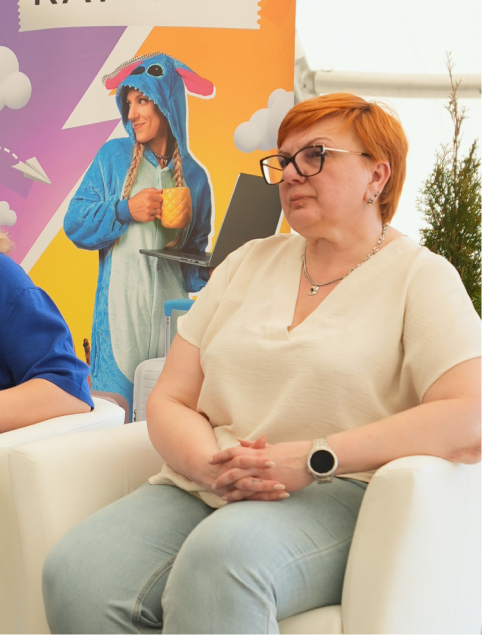
Inna Bondini, Deputy Head of the Department for the Implementation of Veterans’ Policy and Career Guidance at the State Employment Centre
Government programmes should work in two ways: supporting employers willing to hire people with disabilities, and supporting the people themselves who are returning to the labour market or need retraining.
According to the speaker, since 2022, the Ukrainian labour market has suffered a significant loss of human capital. Although the situation is gradually stabilising, the war continues to create imbalances; therefore, the state, employers and the public sector must seek joint solutions to encourage more people to enter formal employment.
Svitlana Kuzemko raised the issue of flexible working arrangements and employers’ willingness to adapt their internal processes. She noted that some roles at Kyivstar involve working in the office or on-site, but a hybrid or remote arrangement is possible for many vacancies. Such flexibility is important not only for people with disabilities, but also for employees whose family or personal circumstances have changed due to the war.
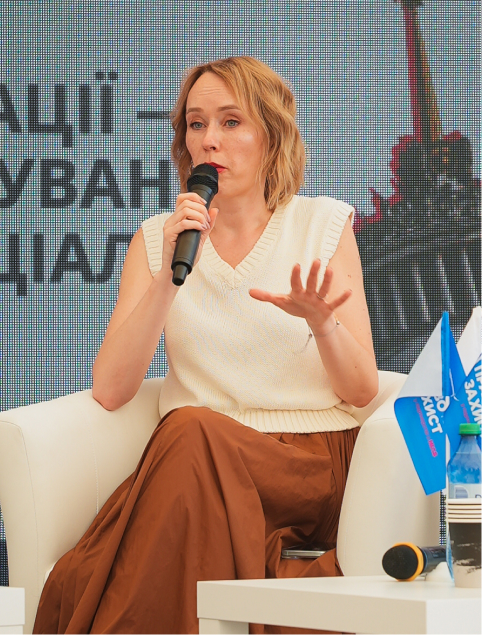
Svitlana Kuzemko, Head of Talent Acquisition and Development at Kyivstar
“Flexible working arrangements are important not only for people with disabilities. During wartime, various life circumstances can affect how a person works, and employers need to consider this.”
Particular emphasis was placed on the fact that inclusive employment requires not only job vacancies, but also a willingness on the part of employers to review their own processes. Companies need to understand better how to attract candidates with diverse backgrounds, create a safe working environment, and assess an individual’s potential beyond what is reflected in a formal CV.
Victoriia Kalyniuk emphasised that the reintegration of veterans and people with disabilities does not end with medical rehabilitation. It must continue through a person’s return to an active life — through education, work, entrepreneurship or other activities that help them feel part of society once again.
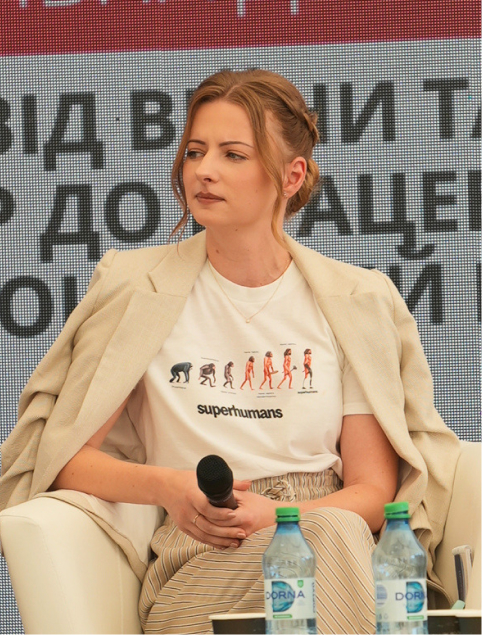
Viktoriia Kaluniuk, Project Manager for the Reintegration of Veterans and Their Families at Superhumans
“Reintegration does not end with medical rehabilitation. It begins to take effect when a person returns to an active life — studying, working, running their own business or engaging in other activities.”
“The problem is not that a person faces a barrier. The problem is that the environment often remains a barrier.”
According to the speaker, the Superhumans team does not offer one-off career advice, but rather in-depth, personalised support. The specialists guide individuals throughout the entire process of returning to work — at a pace and intensity tailored to their needs. Over the course of 15 months, the team has supported 700 individuals in this way.
A key point that emerged was that we should not talk about “barriers faced by veterans” or“barriers faced by people with disabilities”, but rather about the barrier-filled nature of the environment. It is the environment itself that often creates additional obstacles for people returning to work, education or their own businesses after experiencing war.
The participants also discussed the need for a trauma-informed approach in the workplace. It is not only veterans or people with disabilities who require adjustments, but society as a whole, which is living through war. The workplace must therefore account for the diverse experiences of trauma faced by veterans, family members of service personnel, and people who have lost their homes or businesses, or have been forced to relocate.
At the end of the discussion, Valeriia Sekisova highlighted that supporting people on their path to employment cannot be the responsibility of just one sector. Institutional decisions must be made at the state level; the nonprofit sector can help individuals navigate the adaptation process and rebuild their confidence; and employers can create the conditions for retraining, flexible work arrangements, and team integration.
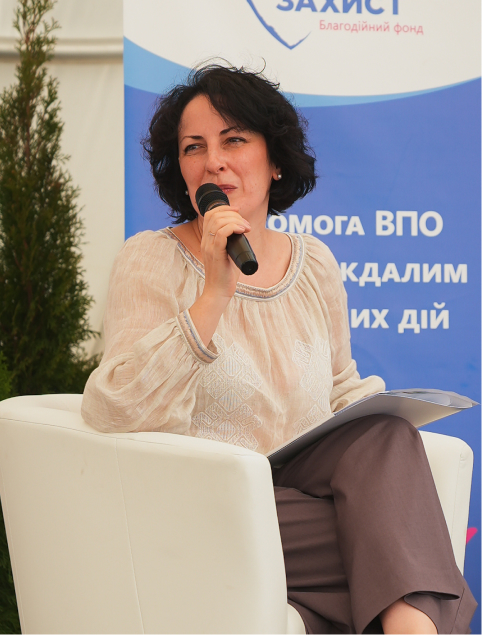
Valeriia Sekisova, Head of the Economic Inclusion for IDPs and the War-Affected Population programme at R2P
“The state, the business and nonprofit sector must not operate in isolation. It is precisely at the intersection of their roles that solutions can emerge which truly bridge the gap between people and work.”
The discussion highlighted that accessibility in the labour market is not merely a social issue, but a matter of Ukraine’s economic resilience, recovery, and human capital. To ensure that experiences of war, migration, or forced displacement do not become a barrier to employment, coordinated efforts are needed from the state, business and the public sector. This is the way to create solutions that not only make the labour market accessible but also genuinely bridge the gap between people and work.